Hire UGC creators in India
Brief Indian creators in English and get videos in Hindi or the language your buyers speak. Rights in writing, payment held until you approve.
- Payment held until you approve
- Rights in writing
- Two rounds of revisions
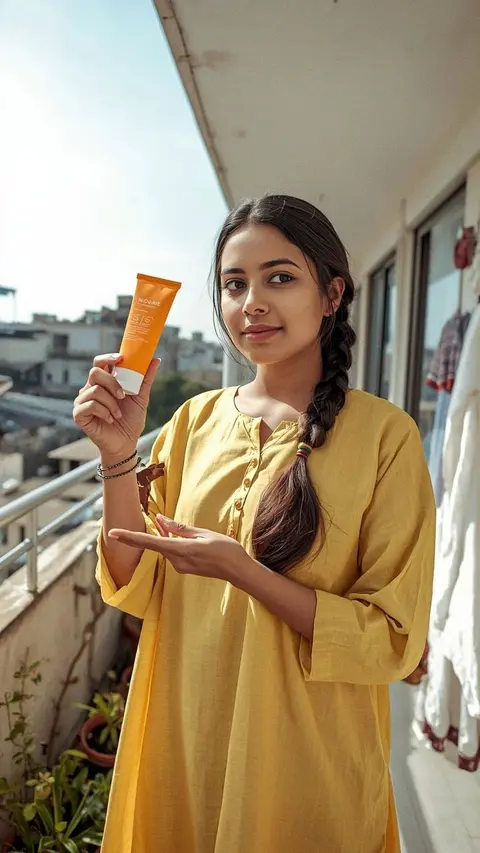
दो हफ़्ते से लगा रही हूँ। कोई white cast नहीं।“Two weeks in. No white cast.” · 30 s · 9:16 · Hindi
- A label up frontASCI: in a 30-second video, the label stays on screen for 10 seconds.
- Hindi, said naturallyBrief in English. The creator says it in Hindi, in their own words.
- A real experienceCCPA guidelines: an endorsement must reflect a genuine, current opinion.
To hire UGC creators in India, write a brief that names the language (Hindi, English or another), the hooks, the platforms and how long you’ll use the video. Pick a creator by samples and rate, and make sure paid videos are clearly labelled as ads, as India’s ASCI guidelines and consumer-affairs rules expect.
India, in numbers
Where your buyers watch, and what they speak at home. All from public sources.
Where people in India watch
The audience each platform reports in India, in millions, October 2026.
Ad reach is the audience a platform’s ad tools report. It is not the same as active users. There is no audience figure for WhatsApp, but 87.7% of internet users aged 16 and over said they used it in the past month. TikTok is not available in India.
of people in India have Hindi as their mother tongue. Next come Bengali (8.0%), Marathi (6.9%), Telugu (6.7%) and Tamil (5.7%).
Census of India 2011of people in India use the internet: 1.04 billion out of 1.48 billion, in October 2026.
DataReportalWhat to put in a brief for Indian buyers
Five things that decide whether the first video is the right one, or the start of a long back-and-forth.
- Language
Write the brief in English and ask for Hindi, or the language your buyers speak. The creator says it naturally, in their own words.
Real data: Hindi is the mother tongue of 43.63% of people in India. More than half grew up with another language.Census of India 2011 - Region
If it matters, name the region your buyers are in. The language people speak at home changes from state to state.
Real data: Bengali 8.03%, Marathi 6.86%, Telugu 6.70% and Tamil 5.70% are the next four mother tongues.Census of India 2011 - Hooks
Ask for 2–3 different openings so you can test which one stops the scroll.
- Platforms and paid use
Name every place the video will run, and say if it will run as a paid ad. Plan for Instagram, YouTube and Facebook.
Good to know: TikTok has been blocked in India since 29 June 2020. YouTube’s ad tools show 573 million people there, and Instagram’s 515 million.PIBDataReportal - Claims
For health, wellness and beauty, list the claims the creator must not make. Leave out anything you can’t prove.
Consumer Affairs: anyone presenting as a health expert must give a clear disclaimer when they promote a product or make a health claim.PIB
Clear labels, and honest endorsements
Label paid videos
ASCI’s guidelines say a creator’s promotional post must carry a disclosure label from its permitted list. That applies whenever there is a material connection: money, free products, discounts, gifts or trips.
ASCIUp front, hard to miss
ASCI wants the label upfront and prominent, not buried in hashtags or links. The Department of Consumer Affairs says disclosures must be displayed so clearly that they are very hard to miss.
ASCIPIBIn a language viewers understand
ASCI says the label can be in English or in the language of the ad, as long as an average viewer of that ad understands it.
ASCIA real, current opinion
Under the 2022 guidelines on misleading ads, an endorsement must reflect a genuine, reasonably current opinion, based on enough information about the product or experience with it.
PIBThe brand is responsible too
ASCI holds the advertiser responsible for disclosing the connection and for making sure the ad follows its code. The brand can ask the creator to edit or delete the post.
ASCIHealth and money need qualifications
Since August 2023, ASCI expects relevant qualifications for health and nutrition advice, and SEBI registration for investment advice. Consumer Affairs asks health presenters for a clear disclaimer.
ASCIPIBLabels ASCI permits
- “Advertisement”
- “Ad”
- “Sponsored”
- “Collaboration”
- “Partnership”
- “Free gift”
- “Affiliate”
- “Employee”
ASCI also lists Instagram’s “Paid partnership” tag and YouTube’s “Includes paid promotion” tag.
Places ASCI says are likely to be missed
- Only in the bio
- On an About Me page
- At the end of the post
- Behind “more”
- Buried in hashtags or links
A label that only appears in one of these places is not enough.
The fines are written into law. The Central Consumer Protection Authority can fine a manufacturer or endorser up to ₹10 lakh for a false or misleading ad, and up to ₹50 lakh for repeat violations. In 2025–26, ASCI processed 1,609 influencer ads, and 97.3% of them needed changes. PIBASCI complaints report
This is general information, not legal advice. Read the ASCI guidelines for your case.
How long the label stays on screen
ASCI sets a minimum time for the label in promotional videos that creators post. It depends on how long the video is.
- Video of 15 seconds or less
At least 3 seconds
The label stays on screen for 3 seconds or more.
- 15 seconds to 2 minutes
One-third of the video
In a 30-second video, that is 10 seconds.
- 2 minutes or longer
The whole brand section
The label stays for every part where the brand or its features are mentioned.
- AudioSay it clearly at the beginning and at the end, and before and after every break.
- Live streamsSay it at the beginning and at the end. If the post stays up afterwards, add the label to the caption.
- Stories and picture postsPut the label on the picture or video itself, where it is clearly visible.
What to do with this: ask for the label in the brief: the word, the language, and how long it stays. Then it is filmed in, and nobody has to add it later.
How UGCOVE solves each one
Eight worries brands have when they hire in India, what the rules or platforms say, and what UGCOVE does about it.
UGCOVE is opening to brands in small groups from a waitlist. It is not open yet.
Write the brief, pick a creator, ship the product, approve and pay.
The steps The rights documentWhat the licence says, line by line, in plain words.
Usage rights Follow the moneyFree to post, held when a creator accepts, released when you approve. US dollars, with an invoice.
PaymentHiring UGC creators in India: questions
Where can brands find UGC creators in India?
UGC marketplaces, agencies, freelance sites, or directly. On UGCOVE, post one brief and Indian creators who fit apply.
Can I get a UGC video in Hindi?
Yes. Brief in English, choose Hindi, and the creator says it in their own words.
Can I ask for Tamil, Telugu, Bengali or Marathi?
Yes. Name the language in the brief, and the region if it matters. Hindi is the mother tongue of 43.63% of people in India, so many buyers grew up with another language.
Do Indian UGC creators need many followers?
No. The video runs on your ads, so filming skill matters, not followers.
Do UGC video ads need a label in India?
ASCI and the Department of Consumer Affairs expect paid promotions to be clearly labelled. ASCI’s permitted labels include “Advertisement”, “Ad”, “Sponsored”, “Collaboration” and “Partnership”.
How long must the label stay on screen?
Under ASCI’s guidelines: at least 3 seconds in a video of 15 seconds or less, one-third of the video if it is between 15 seconds and 2 minutes, and the whole section where the brand is mentioned in a video of 2 minutes or longer.
Who is responsible for the label, the brand or the creator?
Both. ASCI says the creator makes the disclosure, and the advertiser is responsible for it and for making sure the ad follows the ASCI code.
Can I run UGC videos on TikTok in India?
No. TikTok has been blocked in India since 29 June 2020. Plan for Instagram, YouTube and Facebook instead.
Can I hire creators in other countries too?
Yes. UGCOVE works worldwide, so you can brief creators wherever your buyers are.
Works worldwide. UGCOVE is one marketplace for brands and creators in any country. Brief in English, Spanish, Hindi, Thai, Portuguese and more.
Sources
· last checked 27 November 2026- ASCI: Guidelines for Influencer Advertising in Digital Media · with addenda to 17 Aug 2023
- ASCI: influencer guidelines page
- Department of Consumer Affairs: “Endorsements Know-hows!” (PIB press release) · 20 Jan 2023
- Department of Consumer Affairs: additional guidelines for health and wellness endorsements (PIB) · 10 Aug 2023
- PIB: Guidelines for Prevention of Misleading Advertisements and Endorsements, and penalties under the Consumer Protection Act, 2019 · 8 Feb 2023
- ASCI: Annual Complaints Report 2025–26 (press release) · 28 May 2026
- DataReportal: Digital 2027: India · figures for October 2026
- Census of India 2011: Language (Paper 1 of 2018) · published 25 Jun 2018
- PIB: Government bans 59 mobile apps · 29 Jun 2020
- Instagram Help Center: partnership ad permissions
Brief your first creator.
We’re opening to brands anywhere in the world in small groups. Join the waitlist and we’ll let you in as soon as your group opens.
Join the waitlist