UGC video cost in India (2026): the rate card and the real bill
Published UGC rates in India run from ₹1,500 to ₹15,000 a video. In our worked example, a ₹5,000 quote turned into a ₹9,900 bill. Here is where the rest goes, with the source for each published figure.
On this page
Ask five people what a UGC video costs in India and you will get five numbers. One pricing guide says ₹500. An agency price list says ₹14,000. A creator with a good reel will quote ₹20,000 and not blink.
Annoyingly, they are all right. They are pricing different things. A 15-second clip for your Instagram grid is one purchase. A 45-second ad with three hooks and six months of Meta rights is another.
So we read the rate cards, price lists and pricing guides that Indian platforms and agencies had on their own sites in November 2026, and put the numbers next to each other. Below: what a video costs, what the quote leaves out, and what a first test of five videos comes to once you add it all up.
The short answer
Published rates for a UGC video in India mostly run from ₹1,500 to ₹15,000, before ad rights:
- ₹1,500 to ₹5,000 from a newer creator
- ₹6,000 to ₹15,000 from a creator who has made ads before
- ₹12,000 to ₹14,000 on the one agency price list that itemises it, with a minimum of five videos
There is a thin tail either side: ₹500 at the bottom, ₹25,000 at the top.
Then come the extras: the right to run the video as a paid ad, extra hooks (alternative openings, so you can test which first three seconds works), the product itself, the courier. In the worked example further down, a ₹5,000 video ends up costing ₹9,900.
One definition, so we are counting the same thing. A UGC video here is a short vertical video that a paid creator films for you to run from your own accounts or as an ad. The creator does not post it to their followers, so you are paying for the filming and not for an audience.
UGC creator rates in India: what the rate cards say
We did not find a representative, independent survey of what Indian UGC creators charge, so there is no average rate worth quoting. What exists is what platforms, agencies and pricing guides publish on their own sites. Here they are, in rupees per video.
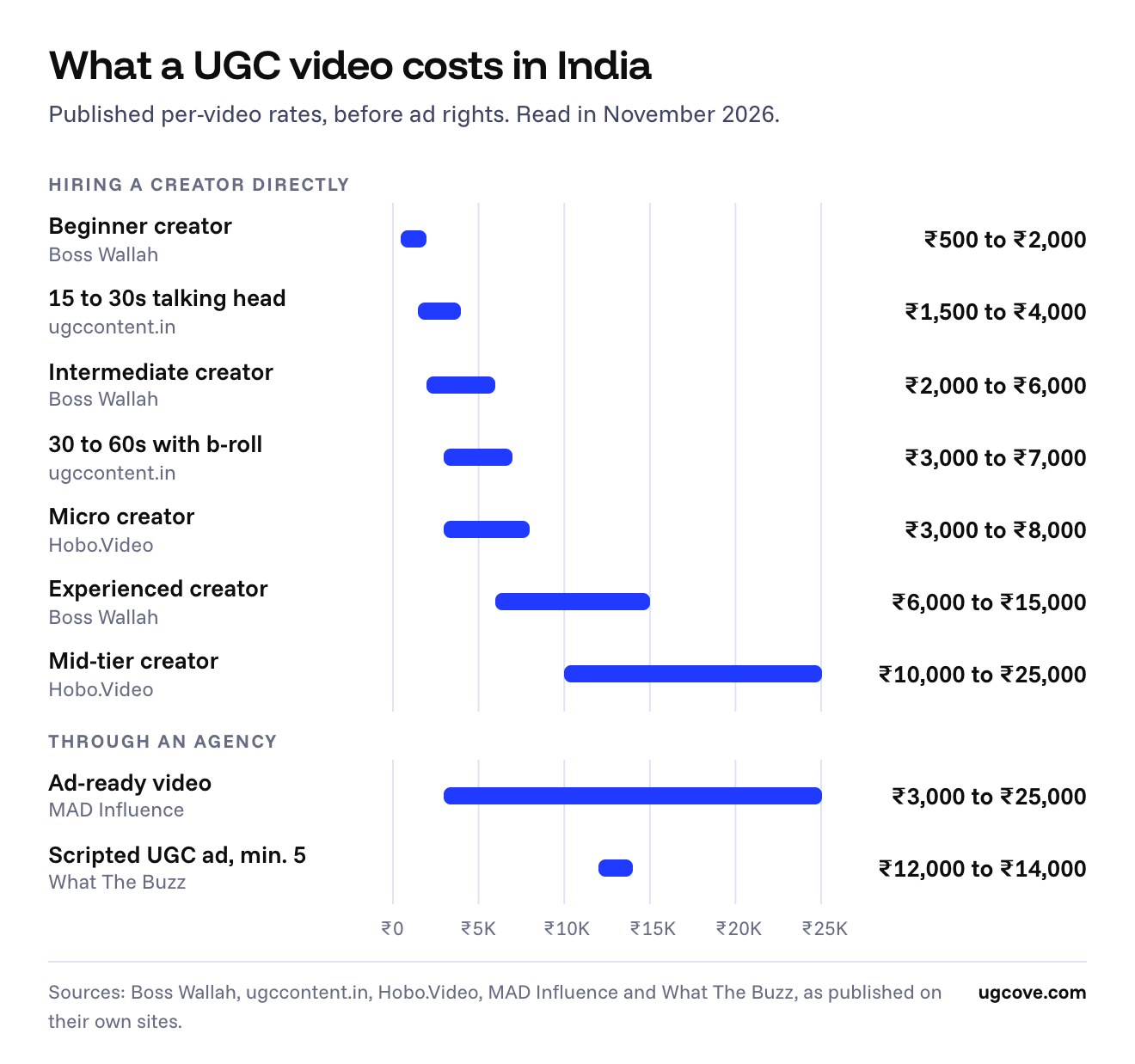
| Who says it | What it prices | Per video |
|---|---|---|
| Boss Wallah, pricing guide (October 2026) | Beginner creator | ₹500 to ₹2,000 |
| ugccontent.in, creator guide (October 2026) | 15 to 30 second talking head, organic use only | ₹1,500 to ₹4,000 |
| Boss Wallah | Intermediate creator | ₹2,000 to ₹6,000 |
| ugccontent.in | 30 to 60 seconds with b-roll, organic use | ₹3,000 to ₹7,000 |
| Hobo.Video, blog | Micro creator | ₹3,000 to ₹8,000 |
| Boss Wallah | Experienced creator | ₹6,000 to ₹15,000 |
| Hobo.Video | Mid-tier creator | ₹10,000 to ₹25,000 |
| MAD Influence, agency | Ad-ready video | ₹3,000 to ₹25,000 |
| What The Buzz, agency price list | Scripted UGC ad, minimum five | ₹12,000 to ₹14,000 |
The ₹500 video exists. It is a first-timer's first video, and it will look like one. That is fine for finding out whether someone can hold a product the right way up. It is not what you put a lakh of ad spend behind.
The middle is where everyone agrees. Three separate sources put an ordinary, competent video somewhere between ₹2,000 and ₹8,000. If a quote lands there, nobody is fleecing you.
The top is not capped. Boss Wallah's guide puts top-level creators at ₹20,000 or more. At that level you are paying for someone whose hooks have a track record, and they know it.
These numbers come with different dates and different methods, and every publisher has something to sell, us included. Use them to sanity-check a quote, not as a price list.
What the quoted price leaves out: usage rights, hooks and shipping
This is the part that catches first-time buyers. The UGC video price on a rate card usually covers the video and the right to post it on your own page. Running it as a paid ad is a separate permission with a separate price, usually called ad rights. Most of the other things that make a video useful in an ad account are extra too.
| Add-on | What it adds | Who says it |
|---|---|---|
| Ad rights (paid ads on Meta, YouTube) | +20% to +100% of the fee | Boss Wallah says 20 to 50%, ugccontent.in 30 to 100% |
| Running the ad from the creator's handle (Partnership Ads, whitelisting) | +50% to +150% of the fee, or from ₹4,499 | ugccontent.in; What The Buzz |
| Raw footage | +25% to +50% | ugccontent.in |
| One extra hook | ₹1,500 | What The Buzz |
| 48-hour rush | +20% to +40% | ugccontent.in |
| Category exclusivity for 90 days | +30% | ugccontent.in |
Rights are sold by time, or should be. A global benchmark from Gigapay, quoted by Billo in November 2026, puts ad rights at 15 to 30% of the base fee for every 30 days. The Indian guides above quote one flat percentage and mostly leave the period out, which is how arguments start. Six months of ads is not the same purchase as one month, so write the period into the brief before anyone films. “Usage rights included” with no dates attached means whatever the other side later says it means.
Is it worth paying more to run the ad from the creator's handle? Meta's own test, run with about 2,400 advertisers in June 2025, found that adding partnership ads to a campaign gave 19% lower cost per acquisition and 13% higher click-through on average. Meta adds that results are not guaranteed, as Meta would.
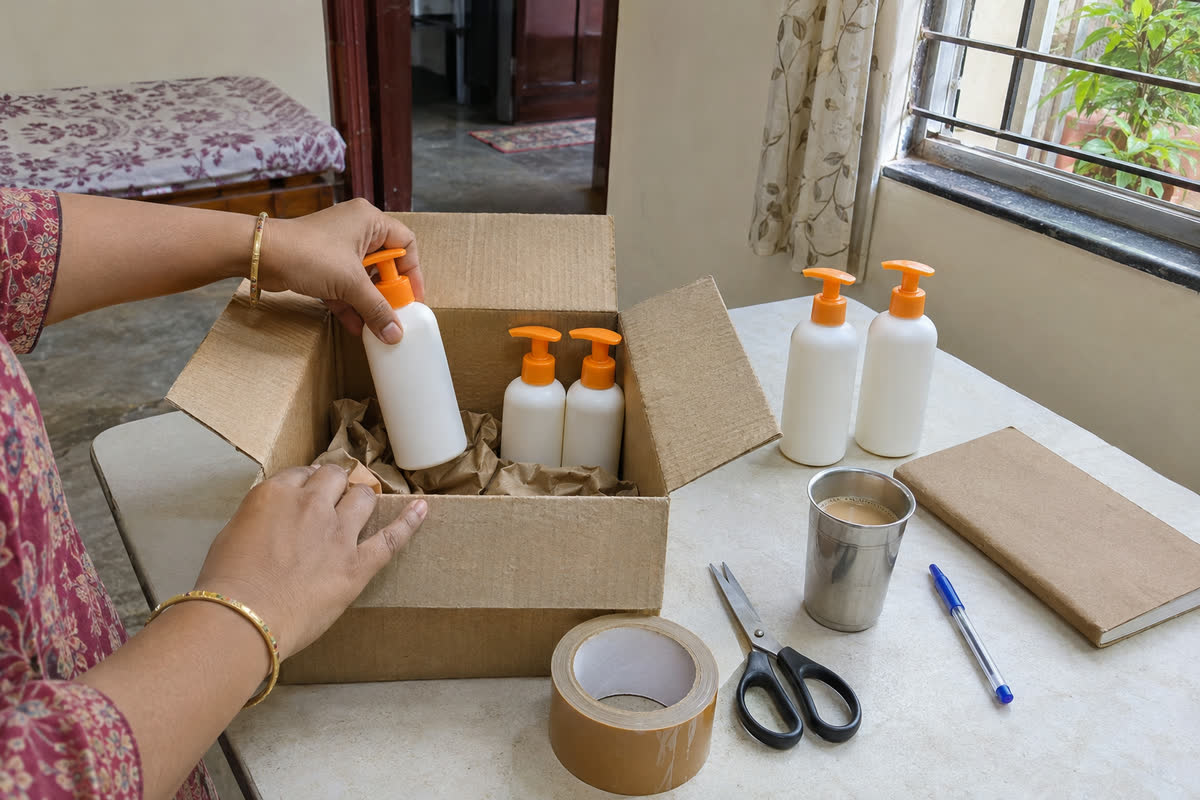
Then there is what no rate card mentions at all. The creator needs your product in their hands, so every creator costs you a unit and a courier. One Indian cost breakdown, from the AI video company Koro, puts shipping at ₹300 to ₹500 a parcel.
Settle the dull parts before anyone films, too: how much is paid up front, how many rounds of changes are included, and what happens if the video is late or never turns up. A reshoot that is not in the deal is a new video.
What a five-video UGC test costs
Say you sell a face wash and want to try UGC ads on Meta. One video tells you almost nothing: if it flops, you will not know whether it was the creator, the hook or the idea. Five creators with two hooks each gives you ten ads to compare, and that is a test.
It also suits how Meta delivers ads now. Meta says its Andromeda system matters “as businesses upload more and more creatives”, which is a polite way of telling you to bring more than one.
Take a typical rate of ₹5,000 a video, ad rights at +50% (the figure ugccontent.in uses in its own worked example), and one extra hook each at the only published price we could find.
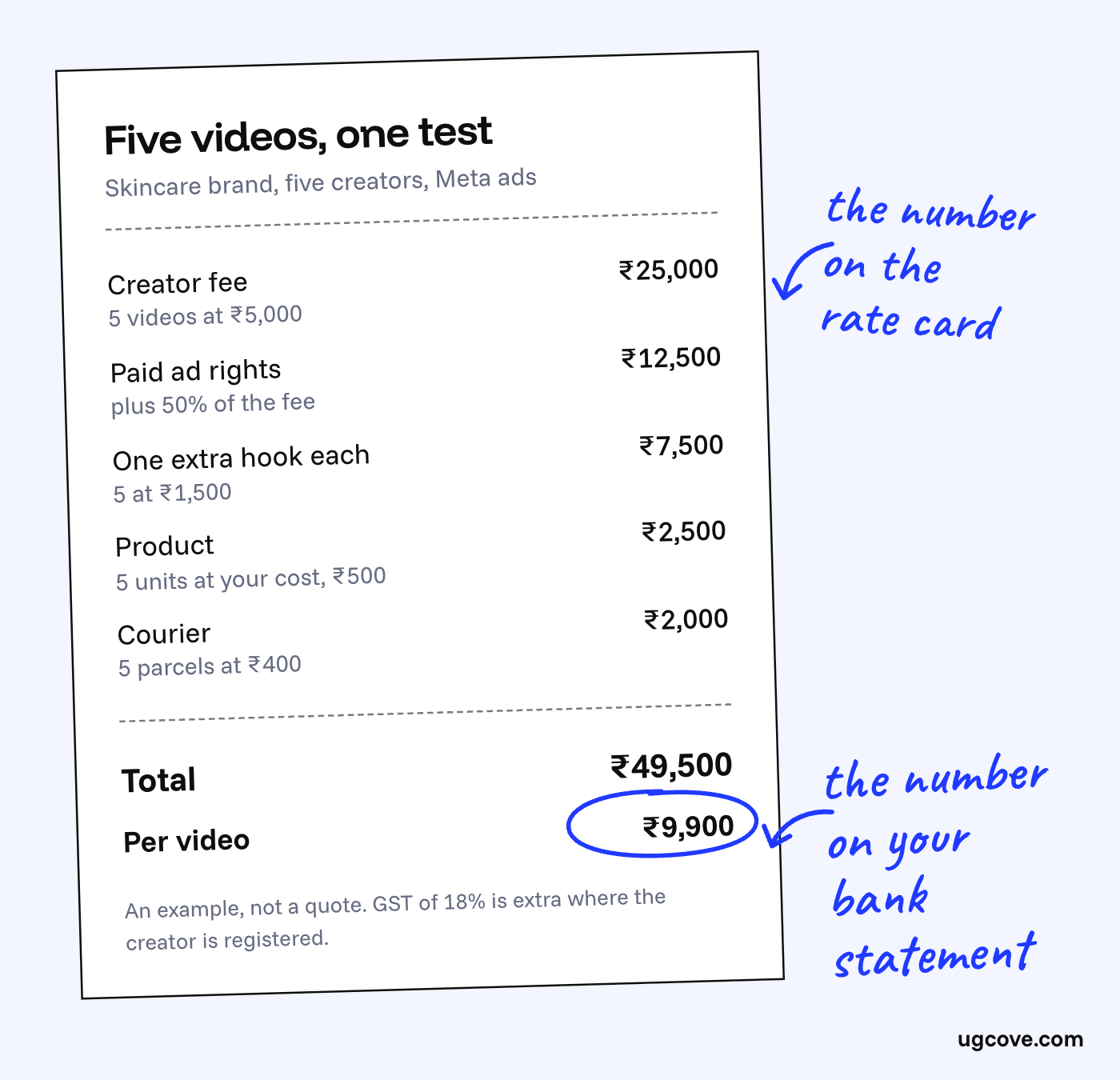
That is ₹25,000 in creator fees, ₹12,500 for ad rights, ₹7,500 for the extra hooks, ₹2,500 of product and ₹2,000 of courier: ₹49,500 in all, or ₹9,900 a video. It leaves out GST, any platform or agency fee, and the ad spend itself.
The ₹5,000 video cost ₹9,900. Nothing on that bill is a rip-off, and every line is a normal thing to pay for. Only one of them was in the quote.
The multiple moves with the rate: the product and the courier weigh more on a cheap video than on a dear one. So when you compare two quotes, compare the bottom lines. A ₹7,000 creator whose rate includes ad rights and a second hook is cheaper than a ₹5,000 creator who charges for both.
Is AI UGC cheaper?
Yes, by a mile. JoinBrands lists AI videos at $5 each. EzUGC sells up to ten a month for $49. That is a few hundred rupees a video, against a few thousand for a person.
Two things to know before you move the whole budget.
The rules are about to change. ASCI's new guidelines on AI-generated content in advertising, signed in September 2026, take effect three months after publication, which puts them at about the end of December. They list things that break the ASCI code “even if an AI label is used”. First on the list is “fabricating endorsements or testimonials”: using AI to suggest that a real person has used or recommended a product when they have not. AI-generated influencers and ambassadors are allowed, but must be labelled. Where a lifelike AI “customer” praising your face wash sits between those two is a question to put to your lawyer before the campaign, not after.
Most viewers did not spot the AI, and the human-made ads still did better. Ipsos published a test in May 2026: 20 ads, half made by humans and half by AI, shown to 3,000 people in the US. Only 25% of the people watching an AI ad were even somewhat confident it was AI. The human-made ads still came out 14% stronger on short-term effectiveness and 17% stronger on long-term. It was a test of ads in general and not of UGC, so read it as a hint and not a verdict.
Use AI for script drafts, hook ideas, subtitles and a voiceover in a second language. Keep a person for the part where someone says they tried it.
GST and TDS on UGC creator payments
Two taxes touch a creator payment in India. None of this is tax advice, so show it to your CA.
- GST. A creator has to register once their turnover crosses ₹20 lakh a year (₹10 lakh in special category states), and a registered creator adds 18% to the invoice. A creator whose turnover is under the limit charges none.
- TDS on the fee. The Income-tax Act, 2025 replaced the 1961 Act for payments from 1 April 2026, and the Income Tax Department says the rates and thresholds were carried over unchanged. For professional fees that means 10% once you have paid one person more than ₹50,000 in a year. Whether a creator's video counts as professional fees or as contract work (1% for an individual, above ₹30,000 a payment or ₹1,00,000 a year) is your CA's call.
- TDS on the product. If the creator keeps the product, it can count as a benefit. Once the benefits you give one person pass ₹20,000 in a year, 10% is due on their value. A ₹500 face wash will not get there. A ₹60,000 phone will.
UGC video cost in Thailand
We are building for Thailand too, and we could not find a reliable published UGC rate there. One Bangkok agency's 2026 guide says flatly that “Thailand has no reliable published rate card for influencer fees.” The figures that do circulate, such as The Nation's 2024 report of 3,000 to 5,000 baht a post for nano-influencers, are for posts to a creator's own followers, which is a different product from a UGC video. Until someone publishes real data, get three quotes and compare the bottom lines the same way.
How to pay less without getting less
- Write the brief properly, once. The most expensive video is the one you pay for twice. Say what the product is, who it is for, the one thing to show, the language, and what must not be said.
- Buy ad rights for the months you will use. Three months of Meta rights costs less than “forever, everywhere”. Agree the price of an extension now, in case one of the videos wins.
- Ask for the hooks up front. One or two more openings filmed in the same sitting cost far less than a new video later.
- Go back to the creators who worked. The ugccontent.in guide puts a three-video bundle at 10 to 25% off, and a creator who already knows your product needs less explaining.
- Get the price as one number. Fee, ad rights, hooks, changes, deadline. If any of those is “we'll see”, it will cost extra.
Where UGCOVE fits
This is what we are building UGCOVE for. You write the brief in your own words, and creators in India and Thailand apply at their own rate. That rate covers what your brief asks for, including the usage rights and two rounds of changes, and you see it, along with our fee, before you confirm. Your payment is held until you approve the video, and the written licence comes with the file. How it works has the whole journey.
We are not open yet. Brands are being let in in small groups, and the waitlist hears about launch pricing first.
FAQ: UGC video costs in India
How much do UGC creators charge per video in India?
Published rate cards mostly run from ₹1,500 to ₹15,000 a video, depending on the creator's experience and the length of the video. Ad rights, extra hooks, the product and shipping come on top: in our worked example, a ₹5,000 video came to ₹9,900.
Do UGC creators charge extra for usage rights?
Usually, yes. The base rate tends to cover organic posting from your own page. Ad rights add 20 to 100% in published Indian guides, and more if the ad runs from the creator's handle.
Is it cheaper to hire UGC creators directly or through an agency?
Not always. The one itemised agency price list we found charges ₹12,000 to ₹14,000 a video with a minimum of five, about what an experienced creator quotes on their own. Compare what each price includes: the script, ad rights, hooks and changes.
How many UGC videos should I order first?
Enough to compare. Five creators with two hooks each gives you ten ads for about ₹50,000, which is a far better test than one ₹20,000 video.
Is AI UGC allowed in India?
Using AI in ads is allowed. ASCI's 2026 guidelines, in effect from about the end of December 2026, say that fabricated testimonials break its code even with an AI label, and that AI-generated influencers have to be labelled.
Prices in this post were read on each publisher's own site on 12 November 2026. We will update it when they move.